RSS


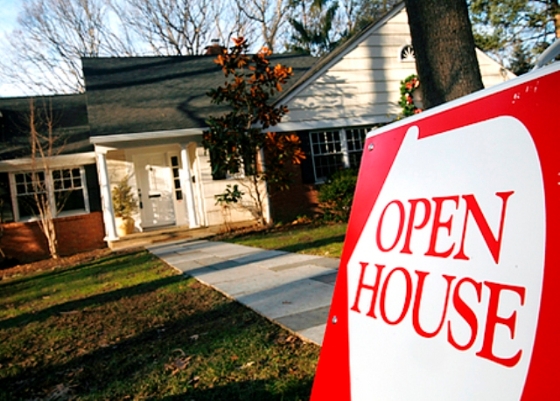
An Open House is an event. And, like many events, it’s easy to get caught up in all the excitement and energy. In fact, when you visit an Open House, you might even end up rubbing elbows with other buyers who are there at the same time. It can feel like a party!


In an environment like that, it’s not unusual to forget to ask important questions about the property. Here are some of the most common:  

 

• How old is the roof?

• How old is the furnace, air conditioner and other HVAC equipment?

• How does the price compare to similar properties in the neighbourhood? (You don’t want to make an offer that’s too high.)

• What are the characteristics of the neighbourhood? (Amenities, safety, traffic, access to public transit, property turnover, etc.)

• What doesn’t come with the home? (Ask specifically about kitchen appliances, gas-connected BBQs, chandeliers, window coverings.)

• Are there any potential impediments to the sale? (Tenants, outstanding liens, etc.)

• Are there any outstanding maintenance issues, or repairs that need to be done? (For example, cracked ceramics on the foyer floor.)

• Are there any issues that impact the full use of the property? (Ask specifically about shared driveways or walkways, public “right of way” through the property, water drainage rights from neighbouring homes, etc.)


Yes, an Open House can feel like a frenzy, and if it’s a home you love, you might feel pressured to make an offer. But, it’s important to take the time to ask the right questions and consider your decision carefully. You don’t want to find out, too late, that there were questions you should have asked.


Want more tips on finding the home of your dreams? Call today.

Read


A year over year decline in home sales and new listings in February contributed to a declining availability of homes in the Saskatoon market. At the end of last month there was a total of 1,588 active residential listings in Saskatoon. This represented a 4% decline from a year ago when there were 1,659 properties available. Although the number of sale transactions in February, 211, represented a 6% decline from the same month last year, strong sales in January helped the overall sales year to date to remain 1% ahead of last year. 

Year to date, a total of 413 residential sales have been recorded on the MLS® in the city of Saskatoon. In February, REALTORS® in Saskatoon listed a total of 1,159 residential properties, this is a 14% decline compared to last February’s number of 1,332. In February of 2016, a total of 1,410 homes were listed for sale. The number of transactions that occurred in Saskatoon was 203 units which represents an 11% increase over January of 2017. 

The overall dollar volume for home sales in Saskatoon was just under $70 million which is a 6% decline from last February. The year to date total volume of transactions is unchanged from last year at $139 million. Year to date sales in the region surrounding Saskatoon, which includes the cities of Warman and Martensville, totaled 122 units representing a 14% increase. The overall dollar volume for this surrounding market was just under $39.5 million for the first two months of the year, an increase of 12% compared to last year. 

“For the past couple of years inventory levels have hovered around 2,000 available properties.” Comments Jason Yochim, CEO with the Saskatoon Region Association of REALTORS® (SRAR) “It is definitely a positive trend to see inventory levels shrinking, this is helpful for slowing price decline.” he adds. The average sale price for a home in Saskatoon slipped 1% in February.

The Home Price Index (HPI) composite benchmark value declined only very slightly in the last 30 days to $292,800. Although this is its lowest point since February of 2012 the decline in the composite price appears to be slowing. With the exception of a couple of months in the spring of last year, the HPI composite value has been in an overall decline since August of 2016 when the value was $317,600. 
-Source: March 2018 SRAR News Release 
 
Looking for sound market advice?  As REALTOR® and Nationally Accredited Buyer Representative - ABR®, Seller Representative Specialist - SRS® and Real Estate Negotiation Expert - RENE, I can provide you with this advice. Call today.
Read


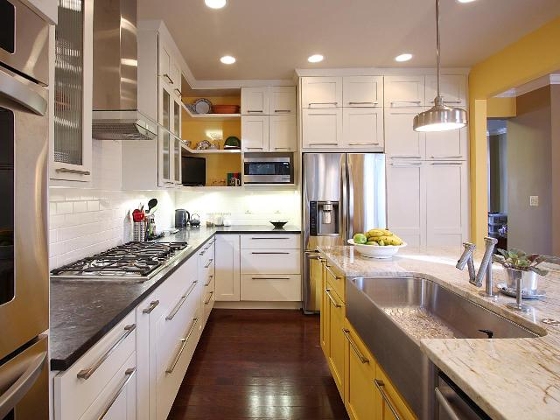
Watch any TV cooking show, and you’ll notice that a chef’s kitchen looks quite a bit different than what you’d find in most homes. But, that doesn’t mean you can’t have one just like it in your home! With a little remodeling, and splurging on some new items, you too can have a kitchen worthy of Gordon Ramsey, Jamie Oliver, or Rachel Ray.


Chefs love counter space. So, when remodeling, plan to create as much as possible. If you have an existing island, for example, you can replace the countertop with a larger one. Just adding eight inches in both directions will make a big difference.


Most chefs have more than one oven. If that’s impractical for you, consider buying a double-oven stove. Also, chefs prefer gas burners for quicker heatup times and exacting control of cooking temperature.  


One thing you’ll notice about chefs is they love stainless steel. That’s because it’s easy-to-clean, hygienic and durable (assuming you take care of it).


Finally, because chefs spend so much time in the kitchen, they want the space to be attractive and comfortable. So, when remodeling, keep decor in mind.


Even if you’re just an amateur chef, creating a chef-worthy kitchen will make the foodie in you smile.

Read


Sometimes the reason for putting your home on the market is crystal clear. For example, you might have a job relocation and need to move. Or, you might have decided to downsize because the kids have left the nest.


However, there are many other motivations to list your home that are not as obvious, and yet are still good reasons to make a move. Here are just a few examples... 


• You’re bored with your home and are looking for a change.


• There’s something you’ve always wanted in a home that your current property doesn’t have, such as a wooded backyard.


• You want to be closer to work, or to activities you enjoy, such as golf.


• You want to be closer to family.


• The neighbourhood is changing in a way that no longer fits the lifestyle you want.


• There’s another neighbourhood you’ve always dreamed of living in.


• Your tastes have changed and you want to live in a different type of home.


None of these reasons makes it an absolute necessity to list your property and find a new home. Yet, they’re all worth considering, especially if moving will make you and your family happier, and provide you with a more desirable lifestyle.


Want to talk about the possibilities? Call today.

Read


January home sales in Saskatoon are off to a positive start in 2018. The number of transactions that occurred in Saskatoon was 203 units which represents an 11% increase over January of 2017. The five year average for January is 194 units. Last month’s sales activity also resulted in an increase in the overall dollar volume of 10.5% to $90,673,143 representing the highest dollar volume for January since 2014. Sales in the region surrounding Saskatoon, which includes the cities of Warman and Martensville showed a 27.5% increase with 65 transactions and an 11.7% increase in dollar volume at $18,049,600. 

“While it is still very early in the year, the past three months have shown trends of increasing sales for Saskatoon, which is certainly a positive sign after many months of lower sales.” according to Jason Yochim, CEO with the Saskatoon Region Association of REALTORS® (SRAR) “It is good to see inventory levels shrinking as well which will help with upward pressure on pricing in time.” he adds. 

The average and median home price in Saskatoon in January also increased. The average sale price for a home in Saskatoon was $344,771, up 1% from last January, while the median price increased by 4.1% to 330,000. Significant increases in the number of homes selling in the higher price ranges contributed to these upward pricing changes. Overall the number of sales between $400,000 and $1M increased by 45% with 64 sales. The number of homes that sold in January between $500,000 and $750,000 made up just over a third of the 64 transactions. The number of home sales between $200,000 and $300,000 remained strong and consistent with last January at 56 transactions. Many of these would be multi-family sales which helps to absorb inventory in that sector of the market.

The Home Price Index (HPI) composite benchmark value declined by 4.1% in January to $293,300, its lowest point since February of 2012. With the exception of a couple of months in the spring of last year, the HPI composite value has been in an overall decline since August of 2016 when the value was $317,600. “If inventory levels continue to decline due to absorption and fewer properties being listed, home prices should expect to see some increase later in the year.” predicts Yochim. The number of active listings in Saskatoon at the end of January was 1,529, the lowest level in the past three years for January and a 4% reduction from last year. This was aided by the increase in sales and a 14% decline in the number of new listings for January.  
-Source: February 2018 SRAR News Release 
 
Looking for sound market advice?  As REALTOR® and Nationally Accredited Buyer Representative - ABR®, Seller Representative Specialist - SRS® and Real Estate Negotiation Expert - RENE, I can provide you with this advice. Call today.
Read


Have you ever considered renting out a room to a student or renovating your basement into a self-contained rental apartment?


It’s a big decision. There are many pros and cons to consider.


On the pro side, renting can provide you with additional income. An extra few hundred dollars a month can go a long way towards paying down your mortgage or splurging on an exotic summer vacation.


Creating rentable living space in your home — for example, an “in-law suite” featuring a kitchenette and bathroom — may also increase your property’s market value.  


On the con side, you’ll have more costs and responsibilities as a landlord. For example, you might need to purchase extra insurance because basic home insurance policies typically do not cover rental units, even if you’re just renting out a room. You’ll also be responsible for dealing with repairs sometimes in the middle of the night.


Also, if you’re not careful about the renter you choose, you might end up with a “problem tenant”. For example, you could have a tenant who is consistently late on rent payments or simply stops paying. That can be stressful.


If you’re deciding whether or not to rent, be sure to check local laws and regulations. Many jurisdictions have very strict rules regarding renting out space in a residential property, and those rules change frequently. Make sure you get the latest information.

Read


Your neighbourhood has a lot of features that can help sell your home faster. Unfortunately, buyers don’t usually notice those features just by driving around. So, you need to make sure they get all the information they need about your neighbourhood.


For example, say homes don’t go on the market often in your area. That’s an indication that the quality of life in the neighbourhood is so good that no one wants to leave! In real estate we measure the area’s “turnover rate”, and it’s handy data to have when listing your home.


Another bit of data that buyers can’t simply see is the local crime rate. But, most police departments keep those statistics. If your neighbourhood has a low crime rate, that’s an obvious plus to sellers.


Demographic data can also be helpful when selling your property. If your neighbourhood has a lot of families, for example, that’s going to be appealing to buyers with kids.


Even local development plans can play a role in making your home more attractive to buyers. If a new ramp to a major highway is in the works nearby, getting to work is going to be easier. That’s a big benefit to commuters. 


Other types of data that can help sell your home include:


• Planned local construction.

• Proposals for neighbourhood improvements. (For example, a new playground.)

• Rates at which local property values are increasing.


Any information that shows the advantages of living in your area is going to be useful when selling.


By the way, this is the kind of information I put together to provide to prospective buyers when selling your home. Contact me today.

Read


Home sales of 205 units in Saskatoon, was up 11% in December when compared to the same month in 2016. Sales activity in the area surrounding Saskatoon saw a 13% increase for December. This increase in activity could be partially attributed to the mortgage rule changes for conventional buyers that took effect January 1st 2018. Home buyers with 20% or more down payment now have to qualify at an interest rate that is 200 basis points higher than the posted rate, or the Bank of Canada’s five-year rate, whichever is higher. Listing activity on the other hand, declined dramatically with an 18% reduction in new listings for December year over year. 
 
“This decrease in listing activity could be the result of seller’s fatigue from having been on the market for an extended time period without securing an offer.” according to Jason Yochim, CEO with the Saskatoon Region Association of REALTORS® (SRAR) “The increase in December sales and decline in hew listings is a positive for decreasing high inventory levels” he adds. 

The year to date story for 2017 however is one that indicates a slower market overall when compared to 2016. The overall sales volume recorded by the SRAR was just short of $1.6 Billion for the year representing a 9% decrease from 2016. This is the third straight year of decline since the $2.1 Billion market peak realized in 2014. Home sales of 3,491 units in Saskatoon for 2017 represented a 5% decline from 2016. This is significantly lower than the five year average of 3,957 sales. In 2017 there was a total of 8,972 homes listed for sale in the Saskatoon market representing a 3% decline from the year previous. The sales-to-listing ratio for the year was 35%, which is a ratio of the number of sales for the year when compared to the number of new listings. In other words, roughly a third of the homes listed for sale ended up actually selling. The number of days on market for a home in Saskatoon in December was 61. This was a sharp increase from 51 in December of 2016 as well as the five year average of 52 days. 

Not surprisingly, with lower sales and still a large inventory of homes to choose from, home prices continued to see downward pressure. The median price for a home in Saskatoon declined by 3.3% in December to $324,000 while the average price showed a half point decline to $339,520 for the month. The Home Price Index (HPI) composite benchmark value declined by 3.7% in December to $295,100, its lowest point since March of 2012. The HPI composite value has been in an overall decline since August of 2016 when the value was $317,600. 

“Successfully selling a home in this current market requires more than information” comments Yochim “Sellers need the guidance to understand how historical sales data impacts their pricing decision.”   
- Source: January2018 SRAR News Release 
 
Looking for sound market advice?  As REALTOR® and Nationally Accredited Buyer Representative - ABR®, Seller Representative Specialist - SRS® and Real Estate Negotiation Expert - RENE, I can provide you with this advice. Call today.
Read


Hopefully, this will never happen to you. But, there are circumstances – a fire, for example – when you and your family would need to exit through a window.


It pays to be prepared for that eventuality.


Your first step is to determine which windows are safe to use as an exit. There should be at least one on each level.


The windows you select will need to provide enough space for a person to climb through (at least a 20 inch opening). Make sure everyone knows which windows are “safe exit” windows, and how to open them. Keep in mind that windows may have screens, so ensure everyone knows how to remove those as well.  


For a second floor window, consider purchasing a portable escape ladder. These are compact and easily stowed in a closet or under a bed. When you need it, it hangs off the sill and expands into a ladder all the way to the ground. It’s not designed for everyday use, but it will get you and your family out!


Rehearsal is a good idea. You want everyone to know how to get to the nearest “safe exit” window – especially in the dark.


Finally, keep your windows in a good state of repair. According to the National Fire Safety Association, windows should open easily for everyone, and should not have anything in front of them that will prevent or delay a quick exit.

Read


Home sales in Saskatoon for the month of November were up 7% compared to November of 2016 with a total of 257 residential sales. This increase could be attributed to ideal conditions for home buyers combined with impending mortgage rule changes slated for January that will affect conventional borrowers. 

The year to date sales however, reflected a 6% decrease with 3,287 transactions. Homes that sold between $300-500,000, made up 1,606 of the year to date sales, or roughly half of the residential sales. Although homes in this price range are the most active segment of the market place, activity in this range has declined by nearly 12% compared to the first eleven months of 2016. Sales activity for homes that sold between $750-1,000,000 remained unchanged compared to last year with a total of 45 units. Homes that sold in excess of $1,000,000 was slightly down year over year with 14 sales compared to 16 in 2016.

Home sales in the market surrounding Saskatoon showed a significant bump in activity in November with 71 transactions, or a 22% increase from November 2016. Of these sales, 34 occurred in the cities of Martensville and Warman in November, compared to 26 last November. Inventory levels also continue to be elevated in the areas and cities in the Saskatoon region where there was 926 available properties for sale at the end of November.

The number of active residential listings that were on the market at the end of November was 1,826, 8% higher than last year. The number of new listings added to the market in November was 583 compared to 652 in the same month last year. The sales to listing ratio compares the number of sales for the month, relative to the number of new listings. The sales to listing ratio for Saskatoon in November was 44.4%.

In November it took an average number of 58 days for a home to sell in Saskatoon. “If you are looking for a home, this is an ideal time with plenty of selection in most price ranges and areas as well as low interest rates” comments Jason Yochim, CEO with the Saskatoon Region Association of REALTORS®, “As for sellers who need to sell, they need to have a true sense of the market and price accordingly to sell within the average number of days.” He adds.

The average price continued to decline. The MLS® Composite Home Price Index (HPI) Benchmark Price continued its steady decline for several months, down by 4.05% from a year ago. The Composite HPI measures the rate of change in a benchmark price for a typical home and is the most accurate indicator of pricing direction in a market.  
- Source: December 2017 SRAR News Release 
 
Looking for sound market advice?  As REALTOR® and Nationally Accredited Buyer Representative - ABR®, Seller Representative Specialist - SRS® and Real Estate Negotiation Expert - RENE, I can provide you with this advice. Call today.

Read


Imagine you were selling your car, and a prospective buyer was on the way over to see it. What would you do? You would probably make your vehicle look as clean and shiny as possible, inside and out.


The same holds true if you’re selling your home and there’s a potential buyer on the way. You want the buyer to be wow’d by your property. Here’s a handy checklist to follow:


• Clean every room. Make your entire house look as “guest ready” as possible.

• As much as is feasible given the time, reduce clutter. Consider packing some items into boxes and storing them in the basement or garage.

• Get pets out of the house. You can take them for a walk, have a neighbour watch them, or take them to a good kennel.

• Turn on the lights, even during the day. You want each room to look bright.

• If there are any maintenance issues, such as a dripping faucet, let your Realtor know. Often, it’s best for buyers to be told rather than discover such issues themselves.

• Open the curtains, except in those rooms where the sun will be uncomfortably strong during the viewing.

• Move your vehicles from the driveway so the buyer can park there. (That can help them imagine living there, which is what you want!)

• Make sure your foyer is especially clean and uncluttered. It’s the first “room” the buyer visits.

• Avoid cooking just before a viewing. Even if the meal is wonderful, the aroma may linger. (Some people don’t like the smell of certain dishes, such as fish.)

• Freshen up the outdoor space. Mow the lawn. Sweep the walkway.


This viewing checklist will help you prepare your home quickly, so when the buyer comes in your front door, there’s a much better chance he or she will be impressed.

Read


You never want to smell smoke in your home and realize there’s a fire. That’s why it is important to be diligent about fire safety. Experts recommend that homeowners be especially careful with the following common household items:


• Portable heaters. Never leave one in a room unattended. Make sure paper and other combustible materials are well away from these units.


• Electronics chargers. We all want our computers, tablets and smartphones to charge quickly. The price we pay for that convenience is chargers that pull in a lot of power, making them very hot. Keep them away from combustible material, as well as other wiring.


• Smoking materials. Be careful with cigarettes, pipes, cigars and other such items. Bedding and upholstery, which burn slowly and dangerously, are the source of 75% of smoking-related fires.


• Candles. Never leave candles unattended for any reason. If you must leave the room, extinguish them.


• Flammable liquids. These can include paints, thinners and some brands of cleaning products. Read labels carefully and follow the safety instructions.


To paraphrase a famous expression: An ounce of prevention is worth not having to deal with a house fire.

Read
The Saskatchewan REALTORS® Association (SRA) IDX Reciprocity listings are displayed in accordance with SRA's MLS® Data Access Agreement and are copyright of the Saskatchewan REALTORS® Association (SRA).
The above information is from sources deemed reliable but should not be relied upon without independent verification. The information presented here is for general interest only, no guarantees apply.
Trademarks are owned and controlled by the Canadian Real Estate Association (CREA). Used under license.
MLS® System data of the Saskatchewan REALTORS® Association (SRA) displayed on this site is refreshed every 2 hours.