RSS

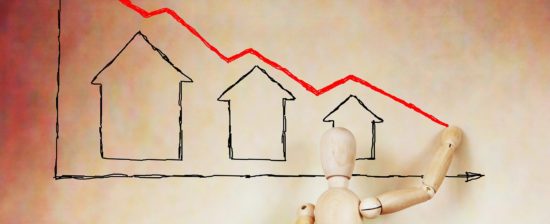
Home sales in January were cause for optimism for the year ahead with a 6% increase year over year. Home sales of 185 units last month represented the highest January total since 2014, the five-year average for January is 195. Another positive indicator is the number of homes available for sale. At the end of January, there was a combined total of 1,592 homes for sale in the Saskatoon market, representing the second lowest monthly total in almost two years. The lowest inventory level was December of 2016 with a total of 1,443 properties on the market. "An increase in sales in a typically quiet month is very encouraging" comments Jason Yochim, CEO of the Saskatoon Region Association of REALTORS® "especially in the wake of the tougher mortgage qualifications introduced last October."

 
At current inventory levels, anticipating no increase in demand and no new properties listed for sale, it would take over eight months to liquidate the current inventory of properties. The five-year average for available inventory in the Saskatoon market is just under five months. The "sales to listing ratio" is an indicator of whether we are in a buyers or sellers' market. It is determined by dividing the number of sales by the number of new listings for a period of time. When this ratio is at 50%, the market is considered balance. The last couple of years has favored buyers in the marketplace with an average sales to listing ratio of 40%. January typically has an uptake of listing activity and quieter sales activity which is reflected in a sales to listing ratio at 26%; the five-year average is 30%.
 
Homes priced below $400,000 saw a much-needed increase in activity compared to last January with 143 sales between $200,000 and $400,000, a 20% increase year over year. The average sale price for January of $341,800 represented a 4% decrease compared to last year. In 2016 a steady number of sales over $750,000 helped stabilize the average price in spite of a 5% decline in sales. This emphasizes that using an average to determine the true market picture is easily misleading. The median price for last month was $318,500 which was the lowest median price in almost five years. A more reliable indicator of the market is the MLS® Home Price Index® (HPI). It is considered to be the most accurate determinant of where a real estate market is trending. The HPI composite benchmark price has also been trending downward, although very slightly for several months.
 
In January, on average it takes 54 days to sell a home in Saskatoon which is consistent with the five-year average of 51 days. This compares to 45 days which is the average of the past 5 years. "In any market, a home that is priced to current market conditions should sell in even less time, often within a week or two." comments Yochim. "Buyers are well educated on the market and are not fooled by optimistic sellers. However, they are willing to pay market price for the right home in any market. For homes that are selling, the sale prices are being realized within 97% of the asking price.  The best advice I can give a seller in any market is to get professional advice when dealing with your largest asset" adds Yochim.   -Source: January 2017 SRAR Media Release 

Looking for sound pricing, marketing and timing advice?  As REALTOR® and Nationally Accredited Buyer Representative - ABR®, Seller Representative Specialist - SRS® and Real Estate Negotiation Expert - RENE, I can provide you with this advice. Call today.  
Read


In almost every movie featuring a house on fire, the actors seem to be able to move around the house and see just fine, while beating back flames with a shirt or coat. Of course, that’s not what happens in real fires.


When there’s fire in a home, there is typically complete darkness (because the power goes out) and a cloud of spreading thick, black smoke makes it difficult to see and breathe.


That’s why knowing how to get out of your house — fast — is crucial.


Experts recommend rehearsing what to do in case there’s a fire. Make sure everyone in the family has an exit plan. Each should know exactly how to get out, including primary and secondary exits, and where the family will meet once safely outside.


Never attempt to take anything with you. It may seem like you have plenty of time to grab a coat or purse, but the characteristics of a fire can change in seconds.


As a failsafe, in case you can’t exit through a door, you should determine in advance which window has the safest exit. Make sure that the window opens easily and everyone knows how to remove the screen or any other obstruction.


Finally, don’t call the fire department from inside your house. Get out first, then make the call.

Read


You’ve probably seen signs around the area for Open Houses. You may have even attended a few. These are open invitations for potential buyers to drop by on a certain day and time, to check out the property and get more information.


When you’re listing your home for sale, you might wonder whether you’ll need to have an Open House.


To answer that question, you’ll need to consider the pros and cons. Planning and hosting an open house isn’t as easy as it may seem. There’s a lot of preparation involved. In addition, you’ll likely spend hours making your property look its best and you’ll need to be away from your home for a good part of that day.


That being said, an Open House has many advantages.


• It helps showcase features of your property that may not come across well in advertisements and listing descriptions.


• It attracts potential buyers who, for any number of reasons, might not otherwise call to view the home.


• It generates a buzz and publicity about your listing.


However, an Open House might not be necessary if there is high demand for properties like yours and you’re likely to get multiple offers.

Read

 
Year over year unit sales for the city of Saskatoon saw a 7% decline in 2016. As at December 31, there was a total of 3,679 transactions recorded versus 3,933 in 2015. The total dollar volume for Saskatoon also indicated a 7% decline by years end. There was also a decline in the number of new listings in 2016 of 5% with 9,290 properties placed on the MLS system in Saskatoon last year. In other words, 38% of the homes that were listed ended up selling which is considered a firm buyers' market. This ratio is what is referred to as a sales-to-listing ratio. A 'balanced market' is when one home sells for every two listed and is considered a balanced market at a 50% sales-to-listing ratio. The market for the month of December was in balanced territory with 191 sales and 392 new listings.
 
The market surrounding Saskatoon which includes the cities of Martensville and Warman saw a year end decline in unit sales by 11% with a total of 1,010 sales by December 31. The total number of new listings for 2016 in the markets outside of Saskatoon was 3,192, a sales-to-listing ration of just under 32%. The city of Martensville saw a 10% increase in unit sales in 2016 while Warman saw a whopping 35% decrease in units sold from 2015 to 2016. Other bedroom communities surrounding Saskatoon saw very little change in units sold year over year.
 
A home in Saskatoon took an average of 51 days to sell realizing 96.7% of the asking price on average. "There are buyers out there who are ready to act and are willing to pay market value." Comments Jason Yochim, CEO, Saskatoon Region Association of REALTORS®, "What this tells me is that if a seller is serious about selling their home the best thing they can do is get sound advice on pricing to the current market we are in. The result is a quicker sale for the maximum sale price. Buyers are well educated and not often fooled into overpaying." He adds.
 
The average selling price for a home in Saskatoon in 2016 was just over $350,000 which was only a decline of 1% compared to the average selling price of $354,000 in 2015. This average price was maintained by a year over year increase in the number of homes that sold over $750,000.
 
The MLS® Home Price Index® is considered to be the most accurate determinant of where a real estate market is trending. The composite benchmark value is an aggregate value of various property types and is used to compare changes in market values and trends. The composite benchmark value has been trending downward slightly since August of 2016. The composite value of $299,700 is down 1.6% from the same period in 2015 and looks to continue downward for the near future.
 
"2017 is not likely to see a significant change in market conditions, however being properly informed on what those market conditions are and how to properly price is invaluable.  One of the best ways to stimulate an economy is through a home sale. The average home sale in Saskatchewan generates nearly $50,000 in spin off economic activity. Multiply that by 3,700 transactions." adds Yochim.  -Source: January 2017 SRAR Media Release 
Read


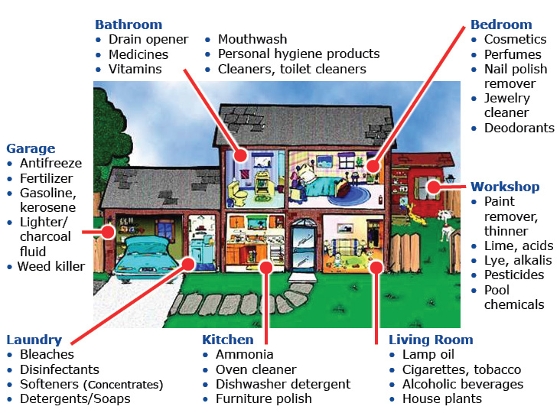
According to the Centers for Disease Control and Prevention (CDC), 90% of exposures to poisons occur inside the home. Almost all are preventable, if you follow some simple guidelines.


• Look for the poison label on products you buy. Visually, it’s a skull and cross bones, often (but not always) with the word POISON above it.


• Don’t make assumptions. Sometimes a seemingly innocuous product, like a shampoo, can contain poison or other ingredients which are harmful if swallowed.


• Avoid mixing different cleaning products together. When chemicals are combined, they change. Combining some cleaning products can even create toxic fumes.


• Keep all medication, even the non-prescription kind, out of reach of children. Never leave medicine on the bathroom counter.


• Never use pesticides inside the home unless the product is clearly labeled for indoor use. Then, use only as directed.


• Never use a charcoal grill or barbeque indoors, no matter how well ventilated you think you’ve made it. Doing so can easily cause carbon monoxide poisoning.


One final tip. Pay attention to the expiry date of products, especially cosmetics and cleaning liquids. As chemicals age, they change and can emit harmful fumes.

Read


Property Surveyors, sometimes referred to as land Surveyors, play a vital role in the real estate world. They are the professionals who determine or confirm the exact boundaries of a property.


Will you need to deal with a Property Surveyor when selling your home?


You might.


Sometimes the mortgage lender will ask for a land survey, especially if your property is older and hasn’t changed hands in many years. You might also be asked for one by the buyer if there is any confusion about the size and boundaries of your property – or if significant changes have been made to it in recent years.


This is nothing to be concerned about.


A qualified Property Surveyor will do the appropriate inspection and measurements on your property and issue you the survey. (It looks a little like a blueprint.)


Property Surveyors are highly trained and licensed. In Canada, Professional Surveyors Canada (PSC) represents the profession nationally, and most provinces have their own professional associations. In the United States, the profession is represented by the National Society of Professional Surveyors, with each state having its own governing body. 


Before getting a new land survey, make sure you don’t already have one. Hopefully, you’ve stored the paperwork that relates to the purchase of your home. Look through it. A valid land survey might be right there.


If you have questions about land surveys, call today.

Read

 
The month of November saw a decline in sales activity as well as new listings coming on the market in Saskatoon and region. Total dollar volume year to date was $1.65 B, a 4% reduction from 2015 and 18% lower than the same period in 2014.
 
The number of homes that sold in Saskatoon for November was 243 units representing a 14% reduction compared to November 2015. As of the end of last month there was a cumulative total of 3,489 home sales, this is 7% lower than a year ago. 
 
The number of homes listed for sale to the end of November 2016 was 8,897. Currently there are 1,687 residential properties available for sale in Saskatoon, only the month of January had less product available with 1,612 units. At the current level of sales, it would take nearly seven months to liquidate this inventory.
 
The average selling price continues to remain virtually unchanged at just over $350,000. Two years ago, the average selling price two years ago by comparison was $357,000, at a time when the market was more active. 
 
"An increase in sales in the higher end homes has helped to support the average price in the Saskatoon market" states Jason Yochim, CEO with the Saskatoon Region Association of REALTORS®. 
 
Sales in every price range below $750,000 saw decreases in unit sales however homes priced above that increased year over year. For sales over $1M there were 25 units sold year to date compared to 13 units a year ago. Homes in the price range between $750-800,000 were up 50% year to date over 2015.
 
The current sales to listing ratio for November was 37% which is firmly a buyers' market as it has been all year. Homes are currently taking 50 days on average to sell in Saskatoon with sellers realizing 97% of the asking price. 
 
"These statistics tell me that sellers who price to the market will realize a sale in much less time than the average of 50 days and close to their asking price. Those who do not price to market are typically responsible for the low sales to listing ratio," says Yochim. "Buyers are more educated than at any other time and typically know where the market is at.
 
There are positives in this quieter real estate market. The recent selling out of the much-awaited River Landing condominium project in less than four days proves that location, location, location is key in any market conditions. This occurred in spite of an oversupplied condominium market with somewhere in the neighborhood of 1,000 multi-family units available for sale.  -Source: December 2016 SRAR Media Release
 
 
Looking for sound pricing, marketing and timing advice?  As REALTOR® and Nationally Accredited Buyer Representative - ABR®, Seller Representative Specialist - SRS® and Real Estate Negotiation Expert - RENE, I can provide you with this advice. Call today.
Read


It’s early in the evening and there’s a knock on the door. You answer and are greeted by an official-looking man who claims he needs to see your utility bill to confirm you’re getting your energy rebate.


Do you let him in?


While he may be legitimate, he may also be using deception to sell you something you don’t want. Here are some suggestions for finding out:


• Ask for a business card. Then, check if it has an address, phone number and website. If the salesperson refuses or just shows you his ID card (which anyone can fake), that’s a red flag.


• Ask for the name of his employer. Sometimes salespeople will say they “represent the phone company”. That doesn’t mean they actually work for it.


• Ask if you can call his company to confirm details before buying. If he refuses, or says the office is closed, shut the door.


• Ask if you can consider the offer and call the office the next day to place your order.


• If you’re really suspicious, ask him to come back later. Then, call the non-emergency police number. Police are aware of common scams in the area.


Most importantly, use your common sense. Door-to-door salespeople can be pretty persuasive, but if something doesn’t seem right to you, trust your gut. Say, “No thanks.”


Of course, if everything checks out with the salesperson, and the offer is a good one, consider taking advantage of it.

Read

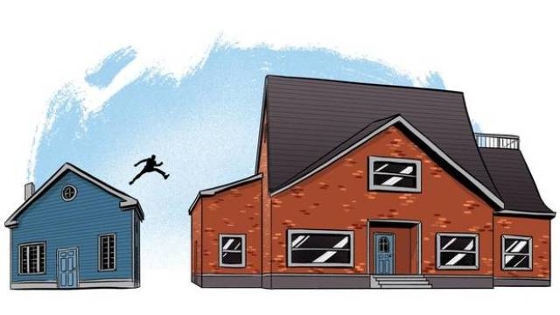
No matter how much you love your current property, you may be dreaming of the day you can buy up into a better home in a better neighbourhood.


Is that day today, or, is it a few years down the road?


Here’s a quick way to make that assessment.


First, make a list of all the practical reasons why it might be time to move up. Those reasons might include features such as: more bedrooms, proximity to work and school, a larger backyard with trees, nearby parks and walking paths and better access to things you enjoy like theatre.


Next, make a list of the emotional reasons for making such a move. Those reasons might include memorable get-togethers with friends on a more spacious deck, an easier and less stressful commute to work, more family time with the kids and enjoyable Saturday golf at a nearby course.


Finally, take a financial snapshot to determine if you can afford to move up. You’ll need to get a good idea of what your current property will sell for in today’s market, average price of homes in your desired neighbourhood, and how much mortgage you’ll need.


Once you have all that down on paper, you’ll have a clear picture of your readiness. If the practical and emotional reasons for buying up are compelling, and you can afford to make the move, then you have your answer.


The time is now!


By the way, if you need help in making this determinationn – especially figuring out what your home will likely sell for, call today.

Read


You’re standing by your window admiring the view. Then you notice it. Moisture has built-up around the edges of the glass. Should you worry?


It all depends on the reason for the build up.


Assuming you have traditional double-pane glass in your windows, there are a few things to look for if you notice moisture.


Often, moisture at the bottom of the windows is simply caused by too much humidity in your indoor air. If that’s the case, simply adjust your humidifier. If the moisture is on the exterior of the window, typically there’s also no problem with the window itself. It may have rained recently or the outside humidity may have spiked causing the accumulation. Generally, there’s no reason for concern.


However, if the moisture is in between the two panes of glass, the seal has broken and surrounding air – along with its water content – has made its way in. This disrupts the thermal barrier of the window, reducing its energy efficiency. In fact, the glass might feel noticeably colder than your other windows on chilly days. In that case, you’ll need to replace the pane.


Similarly, if the moisture is coming in through only one spot — the bottom right corner, for example — then you might have a leak. If you have a wood frame or sill, you may also notice a growing water stain. It’s important to get leaks fixed quickly. There may be water damage occurring within the frame that you cannot see.

Read


When you’re about to sell your home, it may be disheartening to see so many other properties for sale in your neighbourhood. You may be thinking, “That’s a lot of competition! Will our property get noticed?”


Fortunately, there are many proven strategies for standing out in a sea of For Sale signs.


First of all, keep in mind that many home purchasers come from the REALTOR’S personal network of buyers who want to move into your area. So, choosing the right REALTOR® is crucial.


Second, remember that when there are other properties for sale on your street, curb appeal becomes even more important. There are many simple things you can do to make your property look great to those driving around looking at homes. Make sure your property looks as picture perfect as possible.


In a competitive market, it’s also more important than ever to highlight features of your home that are unique and enticing. If, for example, you have a large backyard deck and brand new hardwood flooring, make sure these are mentioned prominently on the feature sheet.


Finally, be as flexible as you can be when scheduling viewings and open houses. Don’t forget that other listed properties in your neighbourhood draw in buyers, who may notice your home. It’s not uncommon for a buyer to view a property and then scout the neighbourhood. So, you want buyers to be able to see your home on short notice and at a convenient time for them. If there are several other nearby properties for sale, it means things are hot from a real estate point of view. You want to roll out the red carpet to buyers.


Looking for help selling your home quickly and for the best price? Call today!

Read

 
For many the average sale price is used to benchmark where the market is at. Year to date statistics reinforce why that is not a sound practice. As of the end of September, a total of 2,936 unit sales were recorded, a 7% drop from the same period in 2015. By comparison, the average sale price of $351,835 remains virtually unchanged from one year ago.
 
Furthermore, the average sale price for September 2016 was 6% higher than last September. The reason, an increase in the number of properties selling at the higher end of the price range coupled with a decline in more affordable home sales. More specifically, year to date the number of units selling between $300,000 and $500,000 declined by 12% while the number of units selling above $750,000 increased by 20%.
 
The Home Price Index (HPI) tool was created by the Canadian Real Estate Association (CREA) as a way to more accurately reflect changes in home pricing and predict pricing trends. The HPI uses a starting point of January of 2002 and establishes a "benchmark" value for a typical property type. This value is then indexed over time to reflect changes in the market. The composite benchmark value for a home in Saskatoon in January of 2002 was $115,000. Currently the composite benchmark price is $308,600. 
 
This index has changed very little since January when it was at $305,400. This would indicate little change in value over the first nine months of the year and has remained virtually unchanged since June.  
New listings for September were down 20% compared to September of 2015. 
 
"A reduction in new listings has a positive impact on the overall inventory levels in Saskatoon which have been elevated since the spring of 2015". comments Jason Yochim, CEO with the Saskatoon Region Association of REALTORS®. 
 
"Ideally we would like to see the number of active listings around 1,500 units" he adds. At the end of September, the number of active listings was 1,841, the five-year average is 1,625 units. The high water mark for active listings was 2,081 in June of 2015.
 
The number of sales for September was 324 units which is a 9% reduction from last year. Year to date the total unit sales was down 7% compared to 3,167 units a year ago. The average time to sell a home in Saskatoon is currently 51 days, the five-year average is 41 days. These homes have been selling for 97.4% of the asking price.
 
 "The key element in the sale of a property is proper pricing, buyers are more educated today than ever before," adds Yochim. 
 
This is reflected in the close relation between asking and selling price. Homes that don't sell are likely listed further from the true market value.  -Source: October 2016 SRAR Media Release
 
As REALTOR® and Nationally Accredited Buyer Representative - ABR®, Seller Representative Specialist - SRS®I can provide you with sound market advice. Call today.

Read
The Saskatchewan REALTORS® Association (SRA) IDX Reciprocity listings are displayed in accordance with SRA's MLS® Data Access Agreement and are copyright of the Saskatchewan REALTORS® Association (SRA).
The above information is from sources deemed reliable but should not be relied upon without independent verification. The information presented here is for general interest only, no guarantees apply.
Trademarks are owned and controlled by the Canadian Real Estate Association (CREA). Used under license.
MLS® System data of the Saskatchewan REALTORS® Association (SRA) displayed on this site is refreshed every 2 hours.